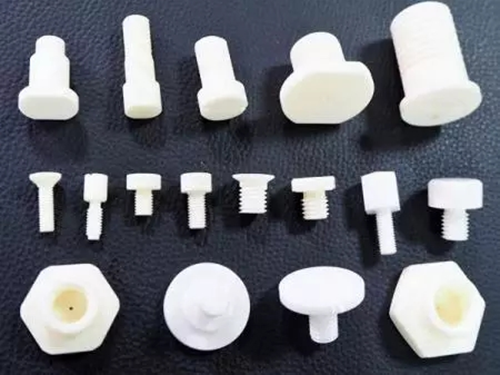
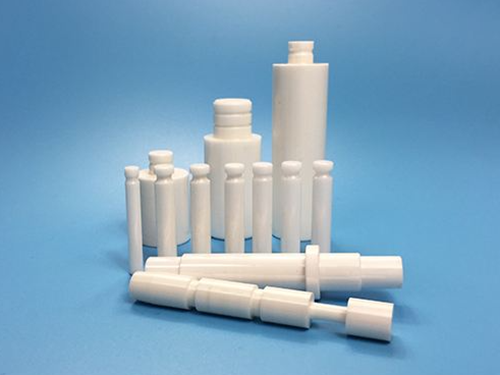
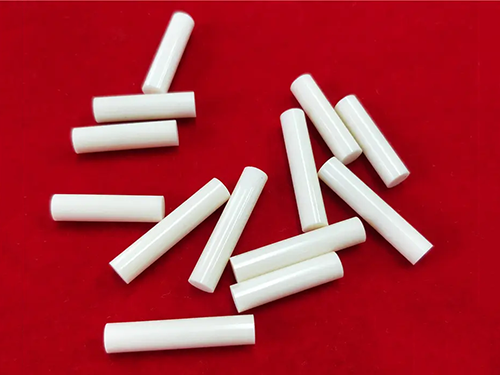
Isostatic pressing forming is one of the forming methods for zirconia ceramics. Isostatic pressing forming is mainly a forming method that utilizes the incompressibility of liquid media and uniform pressure transmission. It can shape complex, large, and slender products that cannot be produced by ordinary methods, and has high forming quality. Do you know what.......
During the processing of zirconia ceramics, pure zirconia ceramics undergo sintering and cracking. Zirconia made by grouting method is naturally air dried for 3 days and then placed in a high-temperature furnace. The temperature is raised to 1450 ℃ at 3 ℃/min and 5 ℃/min, respectively.........
As we all know, alumina ceramics are ceramic products that use alumina as the main material. With a series of characteristics such as high melting point, high hardness, high insulation resistance, and good chemical stability, they are widely used in wear-resistant materials, high-temperature structural materials, electrical insulation materials, and chemical corrosion resistant materials. And injection molding is one of the main molding methods for alumina ceramics. Do you know what aspects need to be paid attention to in alumina ceramic injection molding? Below, the editor will introduce to you:
Zirconia ceramics have numerous advantages and have been widely used in fields such as aerospace, military, mechanical engineering, communication, catalysis, automotive, metallurgy, energy, biology, etc. However, as a new type of structural ceramic material with great development prospects, the improvement of its performance is also of utmost importance. Do you know any methods to improve the performance of zirconia ceramics? Below, the editor will introduce to you
Nowadays, with the continuous development of technology, the application range of zirconia ceramic processing is very wide, leading to an increasing demand for zirconia ceramics in the market, making various zirconia ceramic processing manufacturers more and more. Do you know how to choose a zirconia ceramic processing manufacturer? Below, the editor will introduce to you: